Showing posts with label Ryszard Kapuscinski. Show all posts

5/21/2010

How to report on reality

Documentarians of words and images often think alike. Take for example Werner Herzog and Ryszard Kapuscinski, two masters of reportage.

“Shah of Shahs”, by Kapuscinski, immediately grabs you tight. You experience the world written about with your own skin, you care.


From the very first moment of this reportage the author puts his own sensitivities center stage. In the very first chapter he does not describe the reality he is supposed to report on: instead he describes his inability to grasp it. In the second chapter he writes about three photographs and while he describes each accurately the heart of “the photographs” story are his own imaginary scenes about possible (and absolutely likely) scenes leading to their taking or following them. From the very beginning of this story the approach is subjective, imaginary, poetic. So why do people moan and groan now about his supposed transgressions from reporting the facts, about not belonging to documentary but rather fiction?


Kapuściński’s personal approach chimes with Herzog’s who’s master-class I attended a few weeks ago.


Herzog says that since nobody can describe truth, we have to be a little vague.


We can’t find the real truth but still should strive to approximate it. That’s why one should seek the ecstatic truth as opposed to the cinema verite truth.


Furthermore, facts do not constitute truth. Cinema verite was too much based on facts. So, don’t be a fly on the wall, admonishes Maestro. We should be thorns that pierce. Be a director. Be a film MAKER - inspires this almost 68 years old wonderfully alive and insane maverick in his 3 hour long intense lecture.


What’s also interesting is Herzog’s approach to literature. He unequivocally claims that nowadays one cannot be a filmmaker without voracious reading.

5/06/2010

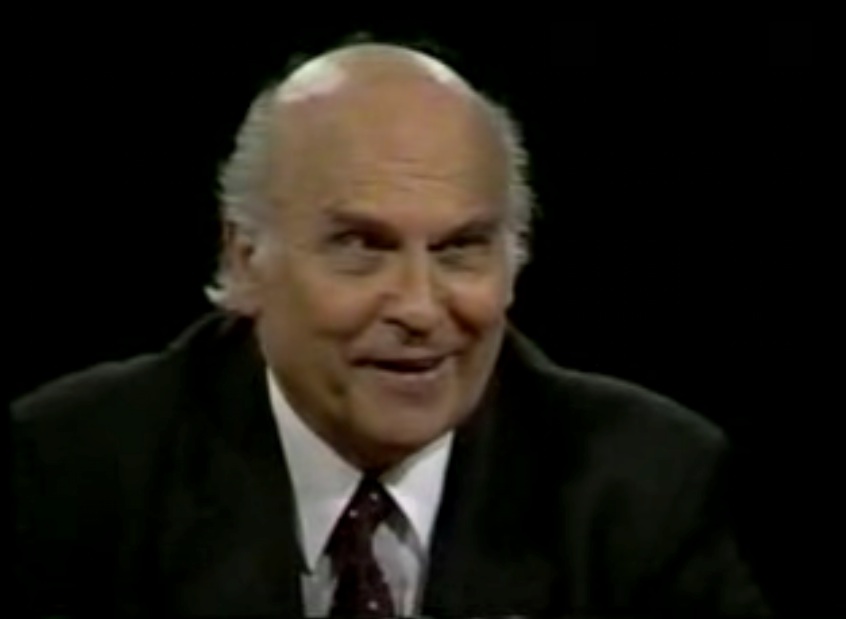
The writers’s smile

Ryszard Kapuscinski talking to Charlie Rose.

I've just finished the Kapuscinski biography. A giant undertaking of a book. The final note of it is a bow toward the towering Maestro. Yet at times I felt uneasy reading more intimate findings and allegations about Kapuscinski’s character.

To learn more about the man I watched his conversation with Charlie Rose. Seeing the Maestro I realized the reason for my ambivalent reaction to certain parts of the book.

Although the biography author indicates a few times the Kapuscinski’s charm and constant smile yet these remarks are overshadowed by the remains of the material (the book runs 600 long). The style of writing does not indicate Kapu’s ever present charismatic personality. Rather it is a descent, engaging account of the search for true Kapuściński. Domosławski writes his story from within himself, and not from within his hero.

Both writers do not use much humor in their writing styles, yet Kapuscinski as a person is all about charm, ever present warmth and a humorous smile. His face constantly telegraphs the distance to the ridiculous (and tragic) game which he nonetheless plays with gusto.

Had Domoslawski written about the Kapuscinski’s writing only, his choice of style would be fine. Yet since he attempts to write about Kapuscinski the man, the style does not fit the theme. Clearly it’s very difficult to find the structural and stylistic equivalent to charm and humor. Yet, it’s not impossible - somebody like Milan Kundera, for example, could pull it off.

Anyway, the Charlie Rose interview is fascinating also because of its content: Maestro revealed that he did not take notes, did not record his interviews. He had two reasons for such approach. First, note taking or turning on a recorder usually alters the behavior of an interviewee and he wanted it straight and pure. Secondly, it forced him to concentrate on what was being said, on those 2-3 key messages usually contained in a conversation.

Indeed the tools and toys we use to record something while seemingly helping us to memorize the experience often rob us from experiencing its core.

4/29/2010

Fiction truer than non


How much fiction is allowed in a documentary? A recent biography of the famed reporter Ryszard Kapuscinski (“Non-fiction” by Artur Domosławski) brings forth the issue with gusto, power and craftsmanship. Being half way through this book I do not understand the controversy it has caused. Supposedly Kapuscinski betrayed the reportage pact with his readers by embellishing reality, fictionalizing events and dramatizing situations.

Back in my Film School days during a seminar with W.J. Has one of the students was feverishly attacking a film scene for being not realistic. Has allowed the exalted student to finish, looked at him for a long time, sighed and quietly asked: “and what is reality?

Indeed. What is reality? How to talk about it? Does a documentarian (using either written words or moving images) need to show events as they are or rather their essence? If we stick with the “as they are” concept, we still need to answer the following: “as they are” to whom? Can representation be devoid of its maker? What is objectivity?

Isn't "objective" just another word for "subtle"? Isn't subjectivity in actually a bow to reality, which in our human perception is always personal?

Perhaps objective does not exist. Perhaps a good documentarian has to be a poet and a storyteller. The differences between (good) subjective reporters and (good) objective ones could only be quantitative.

Some of the poets work so subtly that they are called “realists”, “cinema verite” stylists or “objective reporters”. Kapuscinski at first perceived as the realist, according to the current analysis of his work, was in fact a creator, servicing reality with poetry disguised as reporting - in the name of truth.